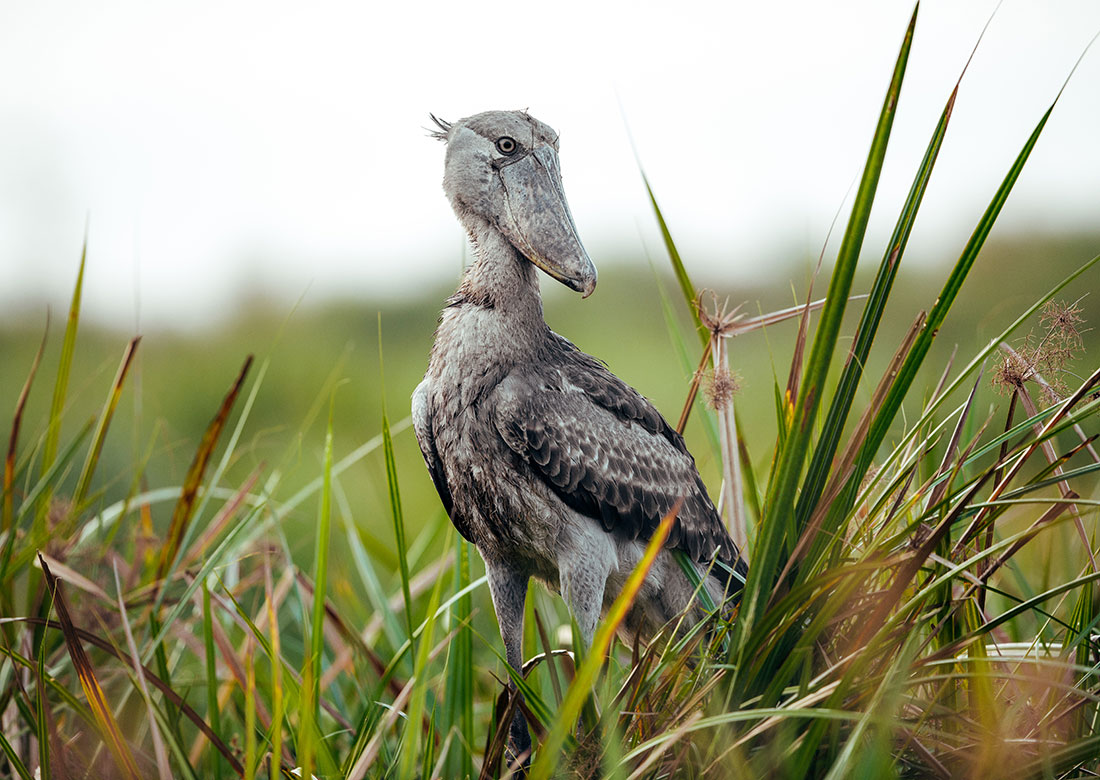
Shoebil Stork In Uganda Shoebill stork is a magnificent, unique, prehistoric, ancient-looking bird that is sought after by visitors in Africa specifically Uganda. Shoebill stork is also referred to as the king whale-head because of its head size and the Arabs used to call it (Abu Maruk) which means the father of the shoe and another one could call it a flying shoe because of its unique bill. Uganda is home to a variety of bird species and wildlife and is the best destination in East Africa where you can see the shoebill stork while on a safari. What makes the Shoebill Stork Bird Unique Shoebil stork is a large outstanding bird with a shoe-shaped bill that is mostly found in the Eastern parts of Africa and is always sought after by bird lovers on a safari in Africa especially in Uganda. It was named the shoebill stork because of its shoe-like bill. An adult shoebill stork has feathers that are mainly grey color while the juveniles are browner in color; the shoe bill stork grows up to 150cm tall in height, 14 pounds in weight, 24cm in length, 20cm in width and 230cm to 260cm wingspan. The male shoebill storks are a little larger and have bigger bil than the females and the bill of a mature adult is about 9 inches long, 4 inches wide with a hook at its tip. Breeding of Shoebill Storks The prehistoric-looking shoebill stork bird is a solitary creature with territories and can be so protective of its territories and forms monogamous relationships during the mating season which takes place between April and June. The shoebill stork can live between 45 to 50 years or more and make their nests on the ground where the eggs hatch from. The female shoebill stork lay two eggs and during the incubation process, both the male and female parents share the incubation duties for one month before the chicks hatch. After hatching the female or mother feed the chicks for one to two months before they adapt to feeding themselves. What the Shoebill Storks Feed On The shoe bill storks in Uganda are found along the lakes and in the swamp areas hence referred to as swamp specialists. The shoe bill storks can stand easily on floating vegetation while hunting and they survive on food in water including lungfish which is their main diet, frogs, lizards, Baby crocodiles, water snakes, puddle fish, Catfish among others. Because of the sharp edges on their wide bill it helps them to feed on water animals. Although the shoebill storks are water birds, they tend to be nocturnal. The shoebill stork bird doesn’t have webbed feet but they can still have the ability to stalk the prey in water because they stand still for long periods awaiting the movements of the prey and then strike at a high speed. When the shoebill stork is flying, they look beautiful while in the air because they have a wide wingspan with heads and necks drawn back. The shoebill stork seems inactive or slow while moving on the ground, and tend to act like statues because they stand still for a long time but are graceful in the air and when attacking their prey they pull back their wings and then approach their prey in a way demonstrating their strength. Shoebil Stork Facts about the Shoebil Stork This is an impressive and somewhat ugly dinosaur-like bird that is found in Uganda. The adult is mainly grey while the juveniles are browner. Their beak is the reason they are called “shoebill storks”. Their long, shoe-shaped beak is used to eat small animals and fish in a single gulp. The end of the beak curves down and forms a hook. This sharp curve is used to pierce through the bodies of their prey to assist in digestion. The young will attack each other. Young shoebills will fight with one another. It is known that shoebill storks are shy animals that prefer to be alone they also have territorial behaviors. When more than one shoebill is born in the same nest, they will compete for attention from the mother. More often than not, the larger bird forces the smaller birds to flee from the nest and live on their own. They are brave. The shoebill stork does not take no for an answer! The species is aggressive. They fight off small and large animals alike. If a weak animal comes across their path, the stork will leap from their hiding place to turn it into a meal. Storks have been known to fight Nile crocodiles, other species of storks, and even each other. However, even though they pick fights, they do not win all of the time! They are extremely patient. Shoebill storks are masters of patience. They will stand in water, large patches of grass, and other hiding places for hours. They know that if they wait long enough for the right moment, they will find their next meal. They don’t make much noise, but they are loud when they do! The shoebill will never make noise when hunting for prey. However, during mating time, the shoebill will release a loud cry to attract a partner. It is a series of loud, terrifying popping noises. They live for up to 35 years. The shoebill stork can live for up to 35 years! Shoebill storks can live long enough to see seven generations. They use their wings to fly and keep balance. They use their wings to fly, intimidate predators, and keep their balance. Like other birds, the shoebill stork can easily lose balance because they stand on two legs. Live in Marshes. A marsh is a wetland that is covered in water for extended periods of time. Marshes rarely have trees but the grass is tall and forms hiding places for species such as the shoebill. Marshes are found on the edges of lakes and rivers where the waterbed is higher. They are solitary