Zebras In Uganda
The Zebras, just like the wild asses and horses are also equids. Zebras are herbivore; they can live up to 40 years with a gestation period of 12 months and give birth to a single foal at a time that is keep away from other zebras for at least 3 days giving it time to gain its sense of sight, smell and voice recognition. They have strong teeth good enough for grinding the leaves and grass, the manes have short and erect hairs and have white and black striped coats. On your Safari in Uganda, we shall offer you an opportunity to see the beautiful zebras on our game drives.
There are about 3 species of zebras in Africa and 2 of them can be found in East Africa namely the Burchell’s as well as the Grevy’s zebras mainly seen in northern Kenya.
Where are the Zebras found in Uganda?
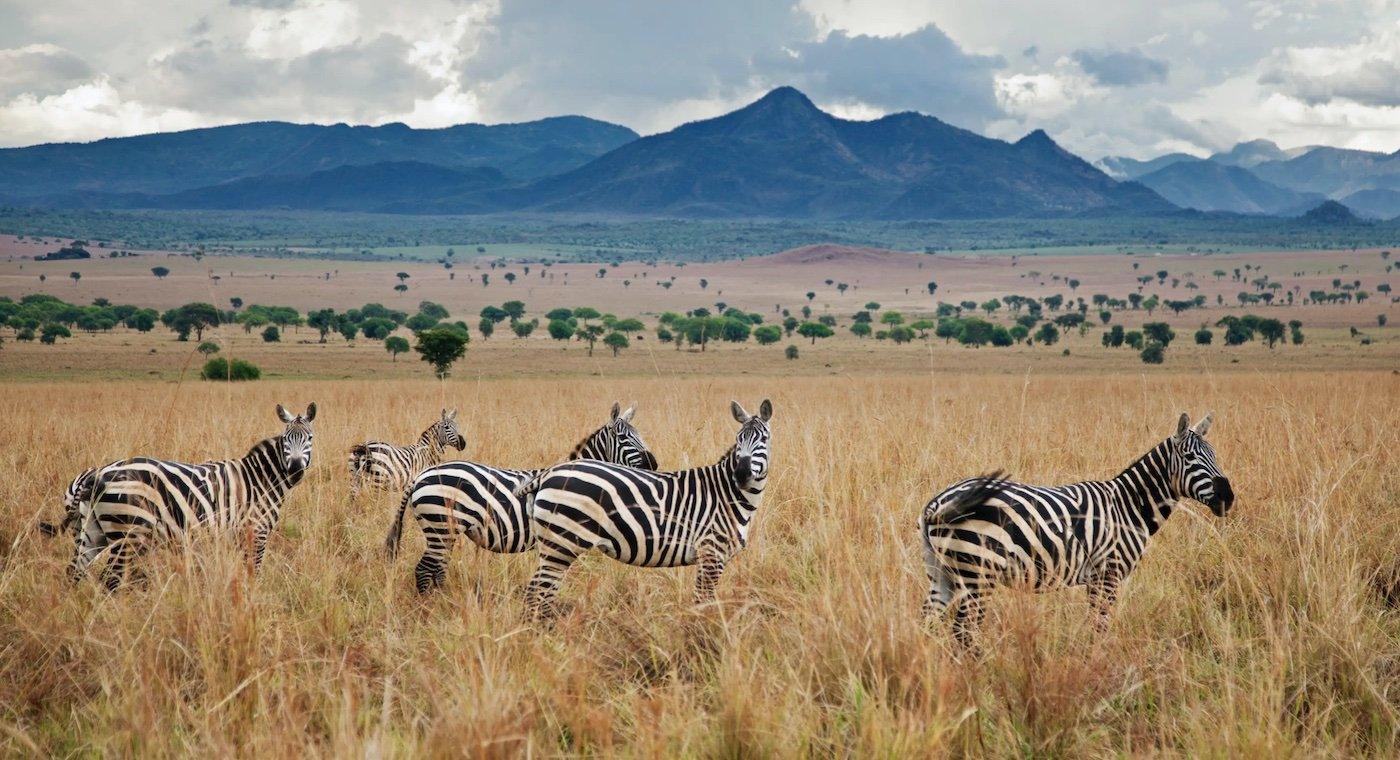
In Uganda, Zebras can be seen in big number in national parks like the Kidepo valley national park which is located in the north eastern corner of Uganda at its border with Sudan. This park offers you the best opportunity compared to all the other places because there are so many zebras in this park and viewing them as they graze in the savannah is very easy. In kidepo, the Zebras and other wildlife can even find you at your hotel.
Lake Mburo national park is another place you can find a huge population of zebras. They are almost everywhere in this park which means a simple game drive through the park is enough for you to see lots of these beautiful animals.
How zebras live.
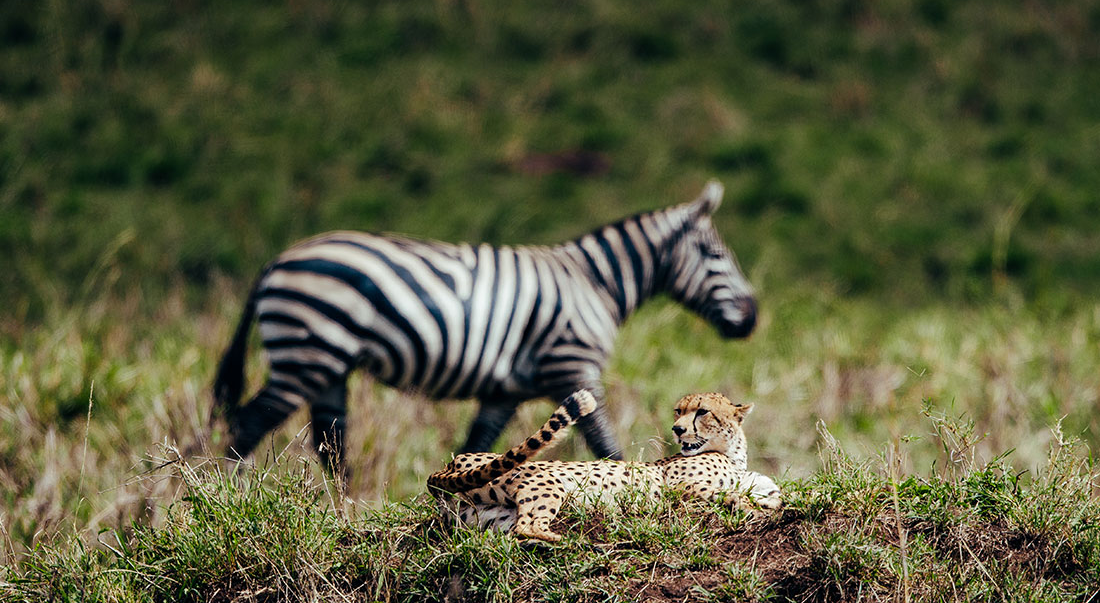
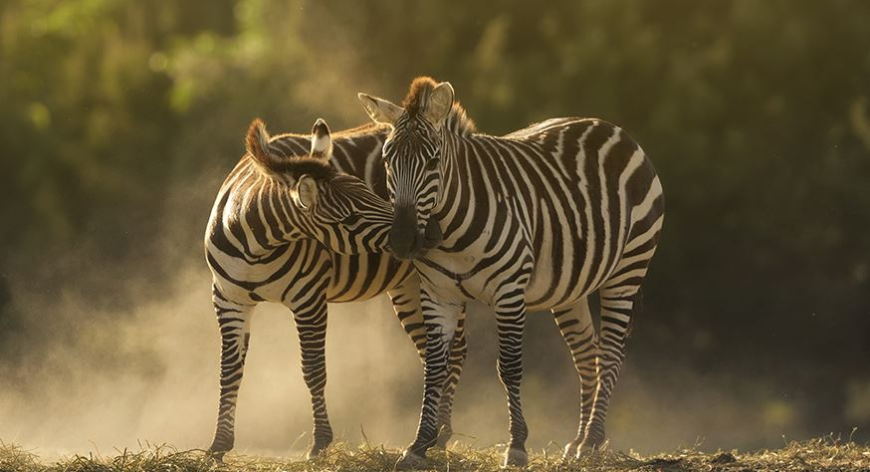
They often stay in small families but within bigger families or herds. Very large herds are often seen in Kidepo Valley Park. They prefer stay in herds for protection from their predators. They live in fear of the cheetahs, lions, leopards and even simple dogs. In this case if one of them is attacked by a predator, then the rest of the family will come to the rescue, make a semi-circle and face the attacker. The same thing happens when the whole family is attacked by a number of predators and it’s injured, another family will come in and help them fight off the attackers.
While still small foals, all of them tend to be so close the mothers but the male ones are closer to the fathers and at around 1-4 years, the males do leave their families and join the groups of male bachelor until they are grown enough to have their own families.
What you should know about the stripes
It’s true that there other animals with some stripes but none of them have a beautiful pattern like the Zebras. Some people believe their coating is to help them look beautiful and survive while under the African hot sun in the sense that they act sun screen for them therefore protecting that sensitive skin of theirs.
There is an assumption that the stripe keep insects like flies and other pests off the zebras. Their stripes have been and are still a mystery as different ideas have been given explaining why zebras are striped.
What is true however is that there are no two zebras in this world that have the same pattern like they seem to appear when you spot zebras from far.
Frequently Asked Questions about Zebras
1. Are Zebras white with black stripes or black with white stripes?
In accordance with the principles of embryology real/original color of a zebra is Black. White color is actually the strip around the main black background of zebras.
Even with a popular belief since the Medieval era that zebras had white bodies with black spots (The proof of this hypothesis lay in the fact that they had white underbellies), scientifically it is proven to be the opposite. In recent studies, Zebras are actually black with white stripes this is becauseZebra embryos are completely black; the white stripes appear during the last embryonic stage. You can be keen on the underbelly of a Zebra on your wildlife safari in Uganda to prove this.
2. How is the Striping Pattern Formed?
Each zebra specie actually has a different striping pattern! This is mainly due to selective pigmentation. With zebra embryos being completely black and the white stripes appearing at the last embryonic stage. The Melanocyte skin cells produce the pigments that give color to the fur.
This is where the hypothesis that zebras are black with white stripes makes sense, as the pattern is a result of pigment activation (black) and inhibition (white). This means that black is the actual color of the fur, and the white patches are simply the areas that have little or no pigmentation. The fact that the skin under a zebra’s fur is black further supports this conclusion.
3. Are there any advantages of these patterns/stripes?
Zebra stripes act as deterrent to flies and other blood-sucking parasites which confuses and discourages them from landing and taking a bite. Researchers from the University of Bristol and UC Davis, USA, spent time on a horse farm in Britain where they investigated the behaviors of tabanid horse flies around captive plains zebras and uniformly colored domestic horses using video analysis techniques. The discovery showed that the stripes don’t deter horse flies as such, especially at a distance, with both zebras and domestic horses experiencing the same rate of circling from the flies. However, video analyses revealed differences in approach speed, with horse flies failing to slow down on approach to zebras, which is essential for a successful landing. They therefore can’t land successfully on the zebra coat due to their low-resolution eyes.
A zebra’s stripes actually work as a camouflage to deter its main predators which are the lions and hyenas. Since the animals herd together, experts believe that the mass of stripes can confuse these predators by acting as an optical illusion that blends their figures together. Therefore, a herd of zebras can create an optical illusion of a giant mass, thus deterring any predators from taking on the herd alone.
These stripes help with heat regulation for Zebras since they spend a lot of time grazing on open plains, which means that they have to bear the intense heat for long periods of time. The zebras with the most prominent upper body stripes generally live in the Northern, equatorial region of their range, whereas those with less prominent upper body stripes are more commonly found in the Southern, cooler regions of the range. This geographic distribution supports the stripes’ utility as heat regulating tools.
Best places to see Zebras in Uganda
When you safari Uganda or undertake a Uganda tour in search for wildlife there 2 national parks that offer the best chances of seeing zebras and these are;
- Lake Mburo National Park
Lake Mburo National Park is the best Park for sure sightings of Zebras with the largest herds found in the country both inside and outside of the park. This is the best park for biking, horseback riding and nature walks in any way you decide to undertake your Uganda wildlife tour in the park, you can’t miss out on sighting zebras. The Zebras found here is the Plains varietythat came from Tanzania. The extent to which zebras have thrived here has also facilitated their translocation to other areas such as Katonga Wildlife Reserve. If a traveler wants to tailor a visit to the park, it’s wise to tailor it to a Uganda gorilla safari to Bwindi Impenetrable National Park or wildlife safari to Queen Elizabeth National Park. Our popular 2 Days Uganda Safari to Lake Mburo National Park and 3 Days Uganda Safari to Lake Mburo National Park are the best way to plan short Uganda tours to the park for not only zebra sightings but several wildlife species.
- Kidepo Valley National Park
Kidepo Valley National Park is the most “un touched” safari in Uganda Park and still one of the best places to see zebras in Uganda. The Zebras in Kidepo Valley Zebras originally came from Kenya and have developed into a sub-species their distinguishing feature being that they become almost maneless as they mature. Kidepo Valley National Park Uganda is some more than 400km from Kampala- Uganda’s capital making it one of the less visited parks, however our popular 3 Days Uganda Wildlife Flying Safari to Kidepo is an easy way to visit the park in a short time without going on a long road drive.
Such a beautiful specie to glimpse at, zebras can be found all over East Africa. On a Kenya safari or Tanzania safari especially wildlife safaris in Tanzania tourists can see zebras alongside hundreds of other wildlife species. On a Rwanda wildlife safari especially at Akagera National Park tourists can also see zebras.