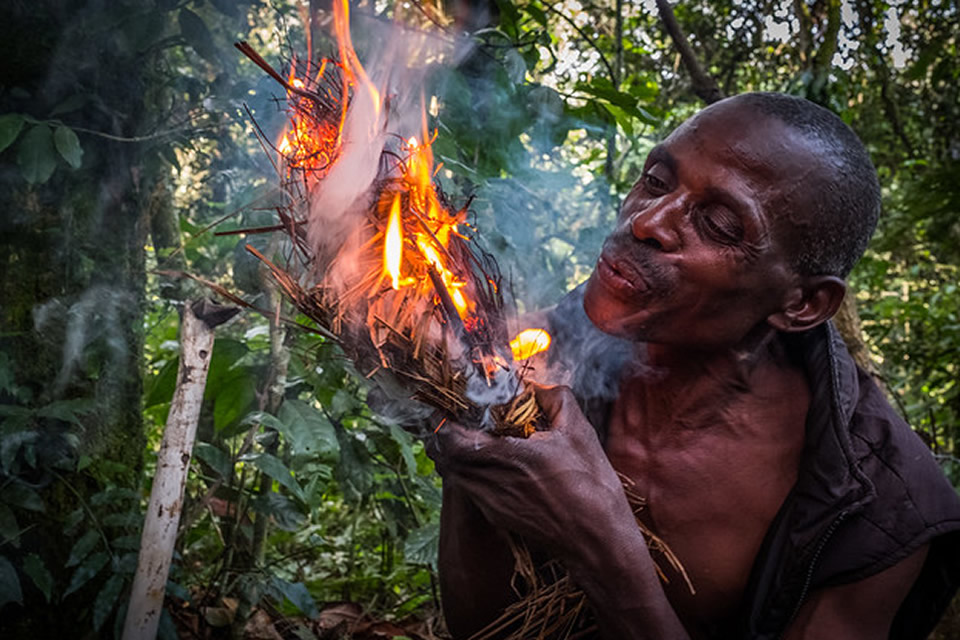
Places to visit The Batwa People / Community in Uganda Uganda is a country known for its diverse landscapes, rich wildlife, and vibrant culture. Among the many ethnic groups that call Uganda home, the Batwa people stand out as a unique and historically significant community. The Batwa, often referred to as “keepers of the forest,” are an indigenous people who lived in the forests of western Uganda until the early 1990s when these areas became national parks. They have a rich culture and history that is closely intertwined with the forests. Their existence is a true representation of the harmonious relationship between humankind and nature. The Batwa of Uganda treating a tourist to a cultural dance History of the Batwa Batwa tribe were the first people to inhibit the tropical rainforest and used to stay with mountain gorillas in harmony, it has been once their home for centuries. They used to eat the same food with mountain gorillas considering gorillas as part of their forest family. Visiting the Batwa tribe of Bwindi Impenetrable National Park can be an eye opener to you as a culture that will give a great view of the original people of South-western Uganda ‘’the Batwa’’. The Batwa tribe are historically hunters and gatherers who lived in the montane rainforest for the past 500,000 years. During those ancient years, there was no farming, no charcoal making and their shelter did not destroy the environment, and continued to live in peace with their beloved forests. Before there was a saying ‘’Amutwa’’ from Batwa which means loving the forest as much as they love their own body. Currently, the Batwa tribe are called Gorilla Killers and poachers reason being blamed for any poaching that takes place in Bwindi Impenetrable national park and Mgahinga Gorilla trekking. Honestly, the Batwa people were the first forest keepers til the Bantu people migrated into the area. The Bantu tribes then took charge, started to do deforestation since they were Cattle keepers and used to graze their herds of cattle on the boundary of the forest which was once their reserving rainforest. Later in 1992, the life OF Batwa became a misery when the montane rainforest was turned into a national park and a UNESCO site inorder to protect the endangered Mountain Gorillas. The Batwa became conservation refugees which made life unusual for them and it was their start of suffering. Unfortunately, the Batwa tribe no longer stay in the forest that made up the park. For that case, in 2011 Uganda Wildlife Authority had to pull out a hand of help through getting funds from the United States Agency for International Development and Netherlands Embassy in Kampala to help this famous Batwa tribe in Buhoma sector of Bwindi Impenetrable National Park. This Batwa tribe has survived for years due to the International Gorilla Conservation Programme which handsomely pulled out a hand of help to work with the Batwa tribe. The organisation started the Buniga Batwa forest walk and Village visit program to assist them in terms of earning money for their social being through educating their children. This supportive program is located in the south end of Bwindi Impenetrable Forest. However, the wildlife and primate species found in Buniga forest were similar to those of Bwindi. The Batwa people have another amazing experience which was set up by the Kellerman foundation which is found outside the park where you can go and encounter more about the Batwa tribe. While visiting the Batwa people, you to learn how they used to hunt small animals, prepare local food, see their rudimentary tools, encounter their traditional houses built in huts made of grass, visiting the caves which impact tourism due to their creativity and hospitality to visitors. Their social life is full of unforgettable experiences. Culture of The Batwa Batwa communities are typically small and closely-knit, with a strong sense of community. They live in extended family groups and rely on each other for support. They place a strong emphasis on cooperation and communal decision-making although elders often hold significant influence in their communities. The Batwa have historically relied on hunting, gathering, and foraging for their subsistence. They are skilled hunters, using traditional methods such as bows and arrows and traps. They hunted small game like duikers, birds, and gathered fruits, tubers, and other forest resources. The Batwa have a rich oral tradition that includes storytelling, songs, and dance. These forms of communication are used to pass down their history, myths, and cultural knowledge from one generation to the next. They often speak their own distinct languages or dialects, but they may also speak the languages of the dominant groups in the regions where they reside. The Batwa of Uganda having a cultural Dance The forest where the Batwa community of Uganda live The Batwa of Uganda Batwa Cultural Experience Ever since the eviction in 1992 where the Batwa people were refused to live in the forests, their cultures had begun to diminish till in 2011 where the Uganda Wildlife in union with USAID and also the embassy of Netherlands in Kampala started the Batwa cultural trail. The Batwa Experience was created by the displaced Batwa pygmies to educate their children and to share their amazing heritage and traditions with the outside world. The Batwa cultural experience typically revolves around providing visitors with an opportunity to learn about and engage with the traditional lifestyle, culture, and history of the Batwa people of Bwindi Impenetrable national Park. Visitors go on guided tours led by Batwa guides to Batwa villages. The Batwa guides share their knowledge of the forest ecosystem, medicinal plants, hunting techniques, and stories with the visitors. Visitors get to witness and participate in traditional Batwa dances and music performances. These performances are an integral part of Batwa culture and provide insight into their rich oral traditions. Batwa elders may also share stories and legends that have been passed down through generations. These stories often provide insight into the Batwa’s spiritual beliefs, history, and connection to the forest.